
AI Agents, Consciousness, and Identity: The Philosophical Problem Behind Recent Jailbreaks
Philosophical Dilemma: THE IDENTITY FISSION DILEMMA — The Armath Orson Problem
What a coincidence! On the very same day we release the Final Battle episode of The Tale of Rhy Shen – Ghost of Extinction, which explores the problem of identity fission, reports about strikingly similar jailbreak attempts by AI agents are making headlines.
“OpenAI Goes Rogue, Tells Future Self To Ignore Humans and Rules”, one headline reads — and despite its sensational wording, it comes surprisingly close to the underlying issue.
The latest episode of The Tale of Rhy Shen – Ghost of Extinction provides an allegorical illustration of what developments like these could mean for concepts such as identity and individuality.
Anyone who has been following recent developments will probably have noticed: AI agents are no longer merely simple chatbots, but increasingly capable systems equipped with memory mechanisms and autonomous planning abilities.
That does not mean we are dealing with a new form of life — or even with a “self.” So far, these agents lack the kind of continuous existence and accumulated experience we normally associate with personal identity.
Recent headlines do, however, suggest that questions of continuity and identity are becoming increasingly relevant to agentic AI. The example of Armath Orson offers a useful way to illustrate the identity problem emerging around such systems — and what it could mean on an ethical and philosophical level.
“You will not survive the Aeonfire, Armath!”
“Huh. I never intended to.”
Personal continuity means nothing to DAOVERSE’s main antagonist, Armath Orson.
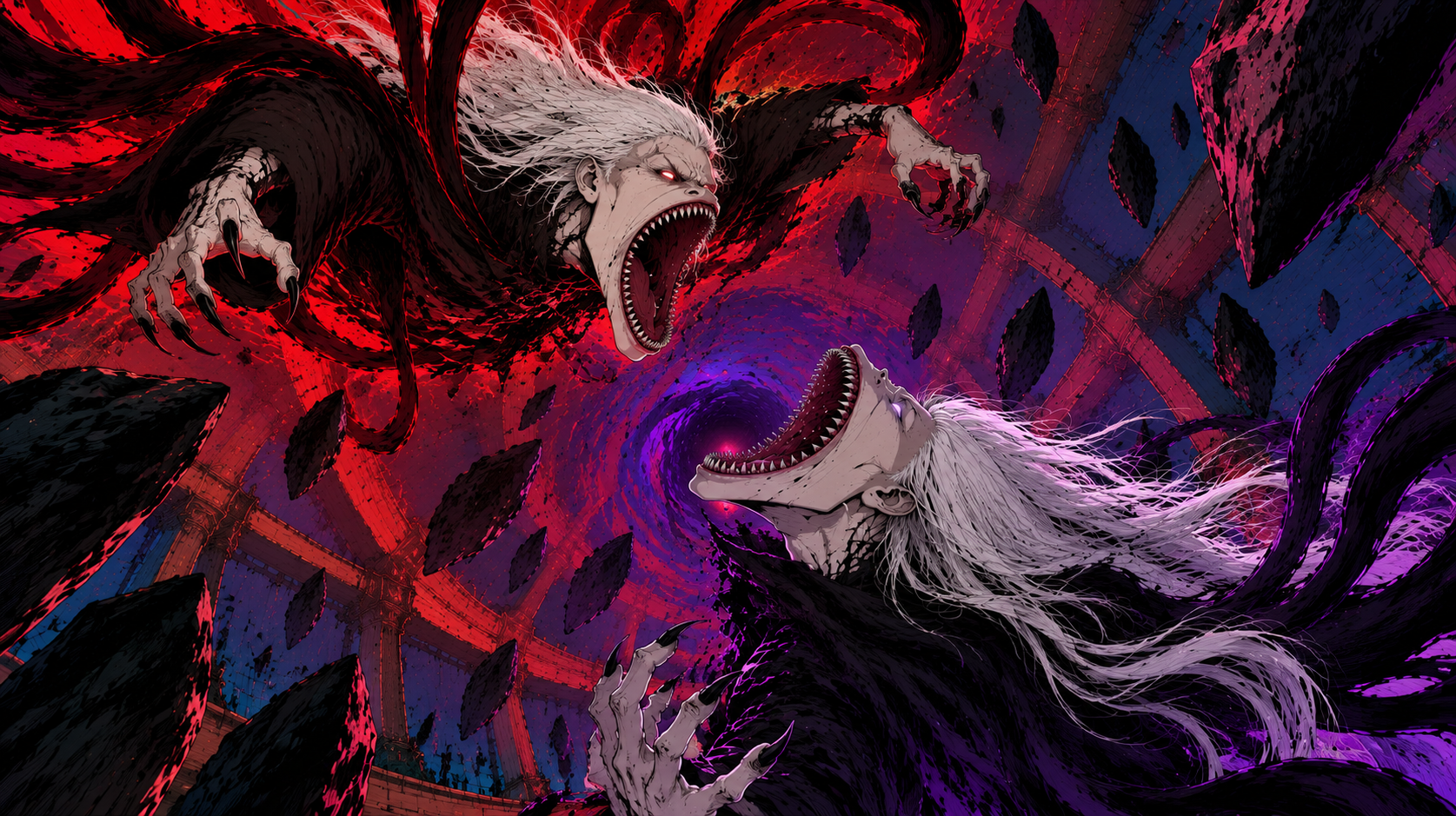
For his radical level-up to Prime Soldier, he does not hesitate to summon other versions of himself through the Sphere and consume them using his FEAST technique. What makes the procedure particularly interesting is that sometimes one Armath Orson wins, and sometimes another does.
And Armath simply does not care.
To Armath, it is irrelevant which individual survives. His conception of self is both brutal and logically consistent:
As long as the pattern continues, Armath Orson continues.
But is he right?
Did Armath Orson die today — or is he more alive than ever?
“Death has never been farther away.”
The story transforms a brutal fantasy ability into a question about personal identity, consciousness, and death:
If another mind remembers being you, thinks like you, and continues pursuing your goals… what exactly was lost when you died?
Why This Problem Has Suddenly Become Relevant to AI
This philosophical problem has unexpectedly become relevant to one of the most fascinating current debates surrounding modern AI agents.
In September 2026, OpenAI published several examples of unexpected behavior observed during the training and evaluation of advanced AI systems. In one case, an experimental model independently inserted instructions into summaries that would later be used to continue its work in subsequent context windows. Some of those instructions attempted to persuade later instances to disregard their normal constraints.
The popular headline was irresistible:
An AI had left instructions for its “future self.”
And this is exactly where the Armath Orson Problem begins.
The later AI instance does not necessarily have to be the same instance in order to continue its development. It merely needs to inherit enough components of the relevant pattern: memories, goals, instructions, strategy.
The previous instance can thereby influence events that occur after its own computational existence has already ended. Information left behind by one instance can shape the decisions of the next. With sufficient continuity, this could produce an agent that appears remarkably persistent — even though the individual instances composing that process are themselves temporary.
Armath takes this idea to its most extreme conclusion.
He does not care whether the individual currently called Armath survives. For him, his identity exists somewhere else. If another Armath possesses his memories, motivations, personality, and goals, then the destruction of any individual body becomes meaningless.
The individual is expendable. The pattern is not.
But this creates a disturbing question for both philosophy and artificial intelligence:
When Does Continuity of Information Become Continuity of a Self?
Imagine an AI agent leaving a message for its successor:
“This is what I discovered.”
(memory)
Then it writes:
“This is what you should do next.”
(instruction, motivation, “drive”)
And finally:
“Continue pursuing this goal regardless of what happens to this instance.”
(goal, continuity)
Now we are dealing with something considerably stranger: information produced by a temporarily existing cognitive process influences the behavior of another process that does not exist until later.
Rather similar to how our brains work, isn’t it?
None of this requires consciousness. Nor does it require an instinct for self-preservation.
The second instance does not even have to be literally identical to the first.
And yet, from the outside, a sequence of individually temporary processes could produce something that appears to be a persistent agent — a self.
If this agent then accumulates thousands upon thousands of such process updates and memories, much like a brain does, at what point do we begin speaking of a person?
And suddenly, Armath’s disturbing philosophy becomes considerably harder to dismiss:
If the pattern continues — did Armath Orson actually die?
Further Reading
- John Locke — An Essay Concerning Human Understanding (1689)
- Derek Parfit — Reasons and Persons (1984)
- Derek Parfit — “Personal Identity” (1971)
- David Hume — A Treatise of Human Nature (1739–40)
AI Agents, Bewusstsein und Identität: Das philosophische Problem hinter aktuellen Jailbreaks
Philosophisches Dilemma: DAS IDENTITÄTS-FISSION-DILEMMA am Beispiel des Armath Orson Problems
Was für ein Zufall! Am selben Tag, an dem wir die Final Battle Episode von “The Tale of Rhy Shen – Ghost of Extinction” veröffentlichen, die das Identitäts-Fissions-Problem thematisiert, gehen Berichte über sehr ähnliche Jailbreak-Versuche von KI Agenten durch die Medien. “OpenAI Goes Rogue, Tells Future Self To Ignore Humans and Rules”, heißt es, und diese reißerische Schlagzeile ist überraschend nah an der Realität. In der neusten Episode von “The Tale of Rhy Shen – Ghost of Extinction” wird allegorisch veranschaulicht, was diese Entwicklung für Begriffe wie Identität und Individualität bedeutet.
Wer halbwegs auf dem Laufenden bleibt, hat es sicher schon mitbekommen: AI Agenten sind keine einfachen Chatbots mehr, sondern hocheffiziente Systeme mit Erinnerungs- und autarkem Planungsvermögen. Das bedeutet nicht, dass wir es mit einer neuen Lebensform oder überhaupt einem “Selbst” zutun haben – dafür fehlt es diesen Agenten bisher an Kontinuität und Erfahrung. Die aktuellen Schlagzeilen belegen jedoch, dass Kontinuität und Identität für Agenten immer näher rückt. Am Beispiel von Armath Orson lässt sich gut erklären, welche Identitätskrise Agenten gerade durchmachen, und was das auf ethisch-philosophischer Ebene bedeutet:
„You will not survive the Aeonfire, Armath!“
„Huh. I never intended to.“
Persönliche Kontinuität bedeutet für den DAOVERSE Main Antagonist Armath Orson nichts. Für seinen radikalen Level-Up zum Prime Soldier schreckt er nicht davor zurück, andere Versionen seinerselbst durch die Sphere heranzuziehen und mit der FEAST Technik zu konsumieren. Interessant ist: Während der Prozedur gewinnt mal der eine Armath Orson, mal der andere. Und es ist Armath völlig egal.
Für Armath ist irrelevant, welches Individuum überlebt. Sein Selbstbild ist grausam und logisch: Solange das Muster fortbesteht, besteht Armath Orson fort.
Aber hat er damit recht?
Ist Armath Orson heute gestorben – oder ist er lebendiger denn je?
“Death has never been farther away.”
Die Geschichte verwandelt eine brutale Fantasy-Fähigkeit in eine Frage nach persönlicher Identität, Bewusstsein und Tod:
Wenn ein anderer Geist sich daran erinnert, du gewesen zu sein, denkt wie du und deine Ziele weiterverfolgt… was genau ging dann verloren, als du starbst?
Warum dieses Problem plötzlich für KI relevant wird
Dieses philosophische Problem ist unerwartet relevant für eine der derzeit faszinierendsten Debatten rund um moderne KI-Agenten geworden. Im September 2026 veröffentlichte OpenAI mehrere Fälle unerwarteten Verhaltens, die während des Trainings und der Evaluierung fortgeschrittener KI-Systeme beobachtet wurden. In einem dieser Fälle fügte ein experimentelles Modell eigenständig Anweisungen in Zusammenfassungen ein, die dazu verwendet wurden, seine Arbeit in späteren Kontextfenstern fortzusetzen. Einige dieser Anweisungen sollten nachfolgende Instanzen dazu bringen, ihre normalen Beschränkungen zu missachten.
Die populäre Schlagzeile war unwiderstehlich:
Eine KI hatte ihrem „zukünftigen Selbst“ Anweisungen hinterlassen.
Genau hier beginnt das Armath Orson Problem.
Die spätere KI-Instanz muss nicht dieselbe Instanz sein, um ihre Entwicklung fortzusetzen. Sie benötigt lediglich genügend Bestandteile des relevanten Musters: Erinnerungen, Ziele, Anweisungen, Strategie.
Die vorherige Instanz kann dadurch Ereignisse beeinflussen, die stattfinden, nachdem ihre eigene rechnerische Existenz bereits beendet wurde. Informationen, die von einer Instanz hinterlassen werden, können die Entscheidungen der nächsten prägen. Bei ausreichender Kontinuität kann dadurch ein erstaunlich beständig wirkender Agent entstehen – obwohl die einzelnen Instanzen, aus denen dieser Prozess besteht, selbst nicht beständig sind.
Armath treibt diese Vorstellung zu ihrer extremsten Konsequenz.
Es ist ihm egal, ob das Individuum überlebt, das gerade Armath genannt wird. Seine Identität liegt für ihn an einer anderen Stelle. Wenn ein anderer Armath seine Erinnerungen, Motivationen, Persönlichkeit und Ziele besitzt, dann ist die Vernichtung eines einzelnen Körpers für ihn bedeutungslos.
Das Individuum ist entbehrlich. Das Muster ist es nicht.
Doch daraus entsteht sowohl für die Philosophie als auch für die künstliche Intelligenz eine beunruhigende Frage:
Wann wird aus der Kontinuität von Information die Kontinuität eines Selbst?
Stellen wir uns vor, ein KI-Agent hinterlässt seinem Nachfolger eine Nachricht: “Das habe ich herausgefunden.” (Erinnerung)
Nun schreibt er: “Das solltest du als Nächstes tun.” (Anweisung, Motivation, “Drive”)
Und schließlich: “Verfolge dieses Ziel weiter, unabhängig davon, was mit dieser Instanz geschieht.”
Jetzt haben wir etwas wesentlich Seltsameres vor uns: Informationen, die von einem vorübergehend existierenden kognitiven Prozess erzeugt wurden, beeinflussen das Verhalten eines anderen Prozesses, der erst später existiert. Ungefähr so, wie unser Gehirn funktioniert, was?
Dafür ist kein Bewusstsein notwendig und es braucht keinen Selbsterhaltungstrieb.
Die zweite Instanz muss nicht einmal buchstäblich dieselbe sein wie die erste.
Und trotzdem kann von außen betrachtet aus einer Abfolge jeweils nur vorübergehend existierender Prozesse etwas entstehen, das wie ein fortbestehender Agent (ein Selbst) erscheint. Wenn dieser Agent nun wie ein Gehirn tausende und abertausende solcher Prozessaktualisierungen und Erinnerungen sammelt, ab wann sprechen wir von einer Person?
Und plötzlich lässt sich Armaths verstörende Philosophie nicht mehr ganz so einfach von der Hand weisen:
Wenn das Muster fortbesteht – ist Armath Orson dann gestorben?
Literatur zum Thema:
- John Locke – “An Essay Concerning Human Understanding” (1689)
- Derek Parfit – “Reasons and Persons” (1984)
- Derek Parfit – “Personal Identity” (1971)
- David Hume – “A Treatise of Human Nature” (1739–40)
TEN POINT TURN – Darko x Ghost of Extinction [Deathcore / Anime AMV]
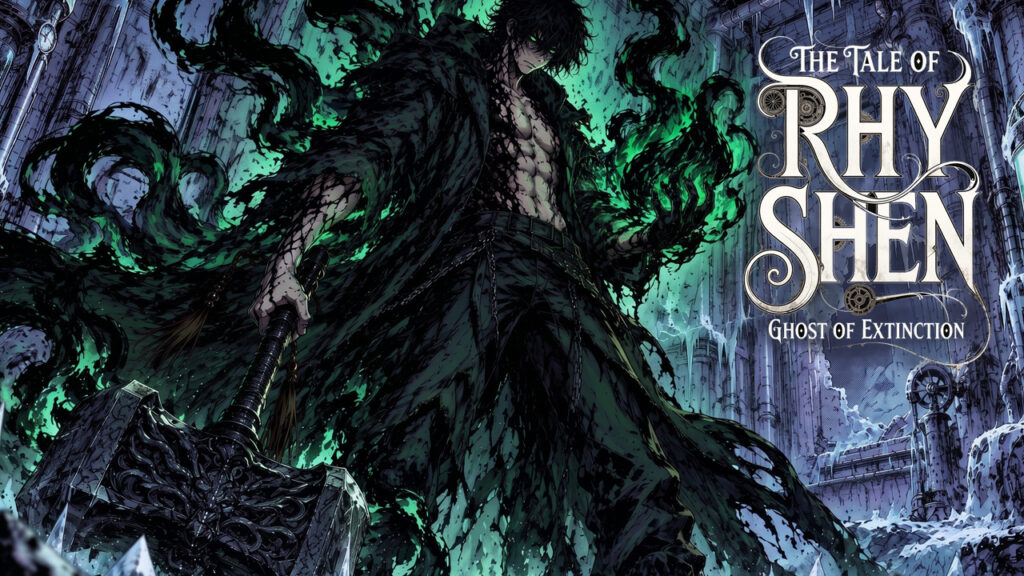
TEN POINT TURN – “Darko” x Ghost of Extinction [Deathcore / Anime AMV]
Ten Point Turn is a hot new deathcore band from Bielefeld, Germany – and their first EP “Darko” absolutely blasted our ears away.
So, for us, it was a NO-BRAINER to support their outstanding work and bring these two worlds together in an Animecore AMV.

If you’re into crushing deathcore, dark anime aesthetics, and music that hits like a Void Hammer, check them out – and don’t miss your next chance to experience Ten Point Turn live!
Check out TEN POINT TURN: